




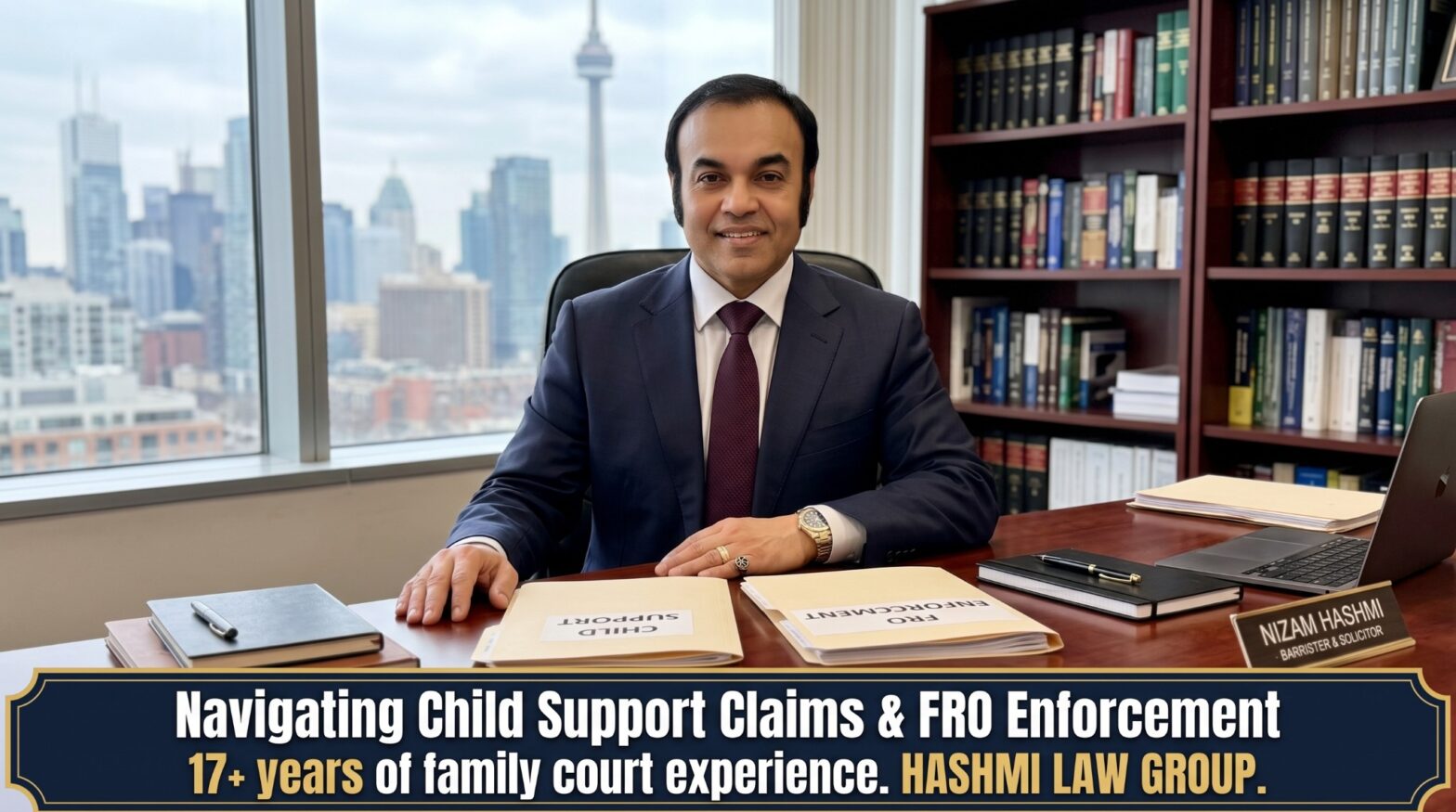
Child support is the legal right of the child. Under both the federal Divorce Act and Ontario’s Family Law Act, parents have an absolute obligation to provide financial support in accordance with their means. However, determining the correct quantum, securing retroactive payments, and dealing with administrative enforcement bodies like the Family Responsibility Office (FRO) require a meticulous understanding of statutory law and evolving appellate jurisprudence.
Establishing and Challenging Child Support Obligations
Child support in Ontario consists of two fundamental pillars governed by the Child Support Guidelines:
- Base (Table) Support: Calculated using the paying parent’s gross annual income and the number of dependent children under the applicable provincial tables. While calculating table support appears straightforward, disputes arise when a payor’s declared income does not reflect their true earning capacity. Under Section 19 of the Guidelines, courts possess wide discretion to impute income where a payor is intentionally underemployed, hides cash income, or diverts earnings through corporate structures.
- Section 7 Special and Extraordinary Expenses: Beyond table support, parents must share allowable expenses in proportion to their respective net incomes. These include reasonable and necessary costs for daycare, post-secondary education, medical/dental health premiums, and extraordinary extracurricular activities. Litigating Section 7 expenses requires demonstrating both the necessity of the expense in relation to the child’s best interests and its reasonableness given the family’s financial profile.
Retroactive Support: The Legal Standard
Claims for past-due child support are governed by landmark rulings from the Supreme Court of Canada. In D.B.S. v. S.R.G. (2006 SCC 37), the Supreme Court established the definitive four-part framework courts must assess when deciding whether to award retroactive support:
- Reasonable excuse for the recipient’s delay in bringing the application;
- Conduct of the payor parent (specifically evaluating whether the payor engaged in blameworthy conduct, such as concealing income increases);
- Circumstances of the child (past and present financial needs); and
- Hardship that a retroactive award may impose on the payor.
The Supreme Court expanded this framework in Michel v. Graydon (2020 SCC 24), confirming that courts have jurisdiction to order retroactive child support even after an adult child has ceased to be a dependent, emphasizing that child support debt does not vanish simply because the child has grown up.
Dealing with the Family Responsibility Office (FRO) and Support Variations
When a court order or separation agreement is registered with the Family Responsibility Office (FRO) under the Family Responsibility and Support Arrears Enforcement Act, 1996 (FRSAEA), the Director has statutory authority to initiate aggressive enforcement mechanisms:
- Suspending driver’s licences and passport privileges;
- Garnishing bank accounts, wages, and federal payments (e.g., tax refunds);
- Registering personal property liens against vehicles and real estate; and
- Summoning payors to a Default Hearing, which can result in jail time for non-compliance.
If you are facing an impending driver’s licence suspension, Section 35 of the FRSAEA permits an application to the Ontario Court of Justice or Superior Court of Justice for a Refraining Order to halt the suspension while a formal variation proceeding is underway.
Where a payor has experienced an involuntary reduction in income, they cannot simply cease payments. Under Colucci v. Colucci (2021 SCC 24), the Supreme Court clarified that payors seeking a retroactive downward variation of child support arrears must establish a genuine, material change in circumstances and must satisfy a strict duty of ongoing, proactive financial disclosure. To avoid accumulating non-dischargeable arrears, payors must immediately file a Motion to Change under Rule 15 of the Family Law Rules.
Official Resources and Related Services
- Ontario: enforcing child and spousal support payments
- Family Law Rules, including Rule 15
- Family Responsibility and Support Arrears Enforcement Act
For advice about your circumstances, explore our family and divorce law services or request a consultation.
Legal Disclaimer
The articles provided above are published for general educational and informational purposes only and do not constitute legal advice. The legal principles and statutory thresholds discussed vary significantly depending on the unique factual circumstances of each case, and procedural rules differ across jurisdictions. Accessing, reading, or relying upon this content does not create a solicitor-client relationship between the reader and Hashmi Law Group. If you are facing a family law conflict, motion, or post-judgment enforcement matter, you should consult directly with a qualified lawyer licensed in Ontario to obtain advice tailored to your legal situation.


